29 April 2011

Literary Blog Hop: Is Literature a Sentimental Journey?

Literary Blog Hop

This week's Literary Blog Hop, sponsored by The Blue Bookcase, asks us to discuss our thoughts on sentimentality in literature.  When is emotion in literature effective and when is it superfluous?  Use examples.  

Good question.  And by good question, I mostly mean hard to answer. Ingrid's answer on The Blue Bookcase was really more of an essay, comparing (perhaps unfairly) Lady Chatterly's Lover and Twilight.  In my book, one of those is a work of literature and one is a piece of pulp fiction, and thus I have very different sets of expectations for them.  

I generally prefer books that make me feel and think, as opposed to just one or the other, and I do not think that a book has to be written for an adult audience to do both.  I also have to become emotionally engaged with at least one character to come away loving a book as opposed to just respecting it. And anytime an author is able to call upon my empathy and make me emotionally engage with a character who shares nothing in common with me, it's a good thing.  Part of the importance of literature is to be able to live somebody else's experience.  But when the emotions are out there on the surface, all the time, and make me feel like I am a teenager again--when every feeling, whether it is love or betrayal or jealousy or joy, is heightened to the  point of making me exhausted just reading it, it loses its effect.  Same thing when an author resorts to emotional manipulation of a reader. 

So what examples shall I use?  How about Cutting for Stone by Abraham Verghese, which is one of my favorite books of the last five years, Miss New India by Bharati Mukherjee, which I recently reviewed here, and Catfish Alley by Lynne Bryant, which I recently reviewed here.  The Verghese book is a masterpiece, spanning decades and continents, world events and the particulars of one family, in a way that was heartbreaking, energizing, and inspiring by turn.  The main characters were of different cultural, political, educational, and religious backgrounds but not once did I consider myself as other, separate from them. With the Mukherjee book, however, with nearly identical differences (how's that for oxymoron?) separating me from the main character, there were few moments when I felt moved at all.  And yet with Bryant's book, with whose main character I share a similarity of class, gender, race, and even place, I didn't so much over-identify with the woman as feel like the story was emotionally manipulating me to get a response. 

I can see now why Ingrid felt moved to write an essay on this subject rather than just a quick blog post!  There's no way that I am going to take the time to finish a more complete defense of my position--not when I could be outside reading in the hammock--so I will just have to let it rest here.  

Book Blogger Hop: What Book Are You Dying to Read?

 Book Blogger Hop

This week's book blogger hop, sponsored by Crazy for Books (on her birthday!) asks: Summer is coming quickly.  What 2011 summer release are you most looking forward to? 

This question is a tough one for me to answer, as most of the books that I've been reading over the last several week are actually summer releases--I work in a bookstore and my sales reps are terrific about sending me early galleys and ARCs and even manuscripts to read.

The book I am right this moment looking forward to reading most is the new novel by Nafisa Haji, who wrote The Writing on My Forehead a couple of years ago, which I really, really liked.  Her new novel, The Sweetness of Tears, is out in about a month.  My Harper sales rep sent me an advance reading copy a few weeks ago but I haven't started it yet.  Our store picked her debut novel for our signed First Editions Club and I have high hopes for this one, too.  I may save it to read on vacation in June, which is about as high praise as I can give to a book!


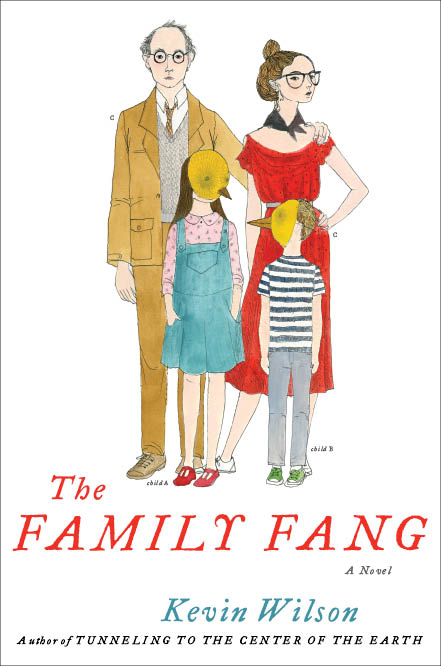
The other book that I'm looking forward to selling when it comes out in August (since I already read it a couple of months ago) is called The Family Fang by Kevin Wilson.  You can read my full review here, but suffice it to say in this space that it is quirky, funny, disturbing, and revealing of our postmodern society in almost equal measure. This book comes out in August from Ecco, but the same lovely sales rep who gave me the Haji book above gave me a galley of Wilson's book some time ago. 


27 April 2011

Mmm-Mmm, Good! Restaurant review for Ibiza Tapas, Northampton, MA, USA

Restaurant logo from their website

My husband and I tried out a new-to-us restaurant this evening that we thoroughly enjoyed.  We seem to have gotten ourselves into a rut recently in terms of dining out--we find ourselves making the circuit of the same 2-3 fine dining, 3-4 moderate dining, and 2-3 breakfast places each month, which is a shame considering the number of very good restaurants in our area.  This post is actually the first time I've devoted blog space to a local restaurant and I'm not sure why--I tend to be pretty obsessive, not to mention verbose, when it comes to rating places I try when traveling.  Why not do the same thing for the good folks back at home? 

So tonight we ventured out to Ibiza Tapas in Northampton, MA (USA) and it was as pleasant a meal as I recall eating in Northampton (a town famed in New England for its high concentration of local restaurants per capita) in quite some time.  Ed was our very congenial server who led us through the menu, which is divided into four sections: Traditional Tapas Hot & Cold, Modern Tapas Hot & Cold.  We ranged around, selecting four dishes (alas, one of my first choices, a shrimp & scallop ceviche with coconut milk, could not accommodate my cilantro aversion) and were deeply pleased with each one.  They bring the dishes as they are prepared, and the only thing I would do differently in the future is stagger my orders, as the last dish that arrived was more delicately flavored than the others and would have been better served first.  We had Pan Catalan (the tomato, while light in color, was bursting with flavor) followed by Esperragos a la plancha (perfect).  Our remaining two dishes are not on the sample online menu and I cannot recall their names, but they were both terrific--pimiento stuffed with oxtail and served with garbanzo beans and a pork tenderloin accompanied by a beet-potato puree and fig. 

Our four small plates were the perfect amount of food and we could have left the table quite sassified, but anybody who knows me knows that it's very difficult for me to turn down dessert.  There are four on offer but I decided on Torrija de queso, a bread pudding made with a little cheese and topped with dulce de leche helado and a very piquant sweet and sour strawberry reduction.  Not too big, not too sweet, and it was all I could do not to run my finger around the bowl to lap up the rest of the strawberry yumminess. 

Two glasses of wine--a bright, crisp vino verde for me and a light-bodied red named Opera Prima for DH--rounded out our meal, which came to about US $50, including tax but before we added the tip.  We couldn't have been more pleased with our experience and we vowed that Ibiza will work its way onto our regular restaurant roster (say that five times fast!) immediately.  I'm looking forward to our next visit, where I know I will be torn between wanting to revisit the dishes we sampled tonight and trying out all of the other, equally yummy-sounding plates that they offer. 


26 April 2011

Top Ten Tuesday: Literary Folks Who Just Need a Good Slap Upside the Head

I don't usually participate in the Top Ten Tuesday memes sponsored by the good folks at The Broke and the Bookish because I work on Tuesdays and usually am too tired before and after work to complete a top ten list of any kind.  But this week the topic was so fun & vindictive that it begged my participation.  I've modified the original from Top Ten Mean Girls in Books to Top Ten Characters from Fiction Who Are In Need of Slapping.  In no particular order, other than the order in which they came to me:

1) Nellie Oleson from the Little House books.  What an awful little snot she was!  Sure, we feel sorry for her in the later years, but not as much as we would have were she not so mean to Laura & Mary in the early years.

2). Eustace Scrubb from The Chronicles of Narnia.  It's true that he got his comeuppance and became the right sort of chap, but until that point...totally slap-worthy.

3) Edmund Penvensie from The Chronicles of Narnia.  Yes, he redeems himself, but before then he betrays his sister multiple times and then works up to betraying his whole family.  All for the want of a little Turkish Delight, which isn't even that good anyway. Seriously, I tried some a few years ago and it was semi-nasty. 

4) Uriah Heep from David Copperfield.   He was so loathsome, petty and obsequious that I still shudder when I think of him.

5 Hilly Holbrook from The Help.  Small-minded, insidious, and socially powerful do not a pleasant character make.

6) Dolores Umbridge from the Harry Potter series.  Because not all evil (and sadistic!) characters are actually Death Eaters. (And conversely not all Death Eaters are evil, but that's a topic for another day...)

7) Cornelius Fudge from the Harry Potter series.  He may not be evil, but he's shallow and power hungry and more concerned with losing his position than with helping the wizarding world. A few slaps upside the head would have improved him immensely.

8) Lady Catherine de Bourgh from Pride and Prejudice.  I probably don't need to elaborate here.

9) Josie Pye from the Anne books. All of the other girls in Avonlea have redeeming qualities, even silly Ruby Gillis.  But Josie was a real piece of work.

10) For the last one, I'd like to invite all of you to leave a comment and tell me who is the top mean girl/guy in *your* book!


24 April 2011

Book Review in Brief: Miss New India by Bharati Mukherjee

Miss New India by Bharati Mukherjee.  Anjali Bose ("Angie" when she's on the make) typifies the Miss New India: a bright daughter of a traditional, lower middle class family in a small town in northern India, who longs for something beyond the role of dutiful wife & mother that is expected of her.  Her teacher notices her ambition and facility with English and persuades her to move to Bangalore, the call-center capital of the world, but unfortunately not before her parents' matchmaking ends in disaster for Anjali.  Bangalore doesn't seem to be a great improvement, at least at first, but as she finds her way amidst a new crowd of diverse but self-serving young people, she discovers an entire, exciting world whose existence she never even dreamed of.  

This was a novel that I *wanted* to like more than I actually liked it.  While I cannot say that I read a lot of novels about the Indian subcontinent, the ones that I have read I have loved, so that might actually be the cause of my disappointment.  For starters, I could not bring myself to like Anjali/Angie.  Yes, I found her plight sympathetic, and while I could put myself in her shoes to a certain extent and understand her motivations, her choices seemed so misguided and shallow.  At almost every turn I wanted to sit her down and slap some sense into her.  At first I thought that maybe the cultural gap between Angie and me (or between Bangalore and my small suburban town) was too wide and I was disappointed in myself as a reader for my lack of empathy.  But eventually I realized that no, regardless of our disparate backgrounds, Angie seems to remain deliberately obtuse about her situation and the people in her life and that all she really wants is a wealthy man, young or old, to keep her in the style in which she would like to become accustomed.  In fact, she reminds me of nobody so much as the women who people Candace Bushnell's book The Four Blondes--who yearn to be upwardly mobile, who are willing to put up with shabby treatment from men if they are wealthy enough, and who never seem to think about what they might be able to do for someone else while calculating what the someone else should do for them.  

Still, there many other things to recommend this book, including the city of Bangalore, a far more fascinating character to me than Angie ever was.  Bangalore seems far more fully fleshed than the people of this novel, and Mukherjee's sense of place is very finely drawn.  

NB: This is my first entry this year in the South Asian Challenge 2011.   I received the book in ARC format from my Houghton Mifflin Harcourt sales rep, Holly Ruck, a couple of months ago.  The book just released in hardcover this week.  

22 April 2011

Book Blogger Hop: Do you stalk authors? Or their books?

Book Blogger Hop

It's been quite a while since I participated in the Blog Hop sponsored by Crazy For Books, but this week, the question and the amount of time I have to spend answering it seem to jibe pretty well, so here you go:  
If you find a book you  love, do you  hunt down other books by the same author?   

Funnily enough, after some reflection I discovered that the answer is "no."  I certainly used to as a child.  Growing up first in a small, dying mill town in Wisconsin and then in a tiny town in rural Mississippi in the 1970s and 1980s, the libraries had some pretty slim pickings.  So when I discovered an author I loved, I not only read everything I could find, I read all the books over and over: Encyclopedia Brown books, Beverly Cleary, C. S. Lewis, Laura Ingalls Wilder, Madeleine L'Engle, the Trixie Belden series, the Anne and Emily books by L. M. Montgomery--if I liked one book by any given author, you could trust me to devour the entire oeuvre. Interlibrary loan became my special friend, for while the local librarians couldn't always make great recommendations for me, they were certainly adept at hunting down all available books by an author I did discover!
     I am not sure what changed.  Perhaps the amount of free time I had to read declined as school became more demanding.  Perhaps it was my access to more and better books as I went off to high school and then college and beyond. Perhaps I begrudgingly acknowledged that not all books by any given author were equally worth reading.  Now I work at a lovely independent bookstore and I can get just about any book I would like for the asking (I have good relationships with my many sales reps), but for that same reason, I feel obligated to read more widely.  Spending time tracking down books by any given author I love would simply take away from the time I have discovering wonderful new authors.  There are, of course, many authors whose new books I will always prioritize reading because I like them so much (Jhumpa Lahiri, Barbara Kingsolver, Abraham Verghese are three recent ones that come to mind) but I don't have the time or the inclination to retrofit my library with favorite authors' previous works. 

What about you?  How do you handle this?


Want to win a signed book of your choice?  Read all about the chance to win here

21 April 2011

Book Review: The Ape House by Sara Gruen

Brief summary: Isabel Duncan works closely with a family of bonobos at the Great Ape Language Lab, teaching them American Sign Language and how to communicate with humans;  John Thigpen is the intrepid journalist who exposes the insidious plotting behind the bombing of said lab.  A media mogul purchases the now-homeless bonobos and exploits them on a reality tv show, leaving Isabel, John, and their few allies to devise a way to resume legal custody of the apes.

Yesterday I finished listening to the unabridged audio of this book, which I picked up two weekends ago while traveling, and for the life of me I cannot figure out if this book was any good or not.  The audio, read by Paul Boehmer, while not awful, was not particularly good, either, which is why it's so difficult for me to figure out.  You would think that a book that features bonobos, animal activists, shady reporters, skanky scientists, Russian pole dancers with hearts of gold,a meth-lab pit bull, multiple explosions, a porn-obsessed media mogul, underage sex, a nauseating animal research facility, computer hackers, and a tabloid editor might make for some pretty interesting story telling.  You would only be intermittently right, sadly. 

All of the humans, even the likable ones, seem two dimensional.  The women, at least read by Boehmer, are smart  but whiny, more inclined to mope than to take action in their lives, with the exception of young Celia, who mostly comes across as a bright but immature bonehead.  The men do not fare much better in terms of character development, but at least Boehmer reads the male voices better. 

The bonobos, on the other hand, are wonderfully fun and emotive, and it was always a pleasure to witness their interactions and read/hear their signed dialogue to each other and to the humans.  I was moved to tears more than once when listening to the bonobo portions, particularly during a reunion scene.  And of course the brief detours behind the scenes of an animal research facility were utterly heartbreaking.

I'm not entirely sure of my own complicated feelings about the use of animals for medical research.  I guess I believe on some level that *some* of it can be justified, as cruelly necessary if we hope to eliminate human suffering.  But I do not think that most people realize the moral costs to such practices;  If we did, the animal testing that is done would be conducted in very different ways.  (Did you know that some animals are not even considered animals by the US Constitution, in order to gain exemption from federal animal welfare statutes for animal testing? This book tells you more about that and other appalling laws affecting animals in the US. More of the book is devoted to the welfare of animals in the food industry, such as chickens, pigs, and cows, but it also delves a bit into the animal testing industry.)

But the very thought of animal testing in situations that do not involve the betterment of the human condition?  I have no idea how any person with any empathy at all can possibly sanction that kind of animal testing.  Cosmetics? Shampoo? Moisturizing lotion? Cleaning supplies?  If you want to see some appalling facts on animal testing, check this website out.  Seriously--do we want tens of thousands of animals to suffer in order to find out which mascara or lipstick has better lasting power?  I know I don't.  If you're currently using any of the drugstore brand cosmetics, or lotions or other unguents, I urge you to reconsider.  The money you save by purchasing lower-priced cosmetics from those companies cannot possibly offset the moral cost that rests on our entire society for the torture of animals in the name of beauty.  The European Union has already outlawed animal testing for cosmetic purposes and I hope the US (and the rest of the world) will soon follow suit. 

Back to the actual book review...there were moments in Gruen's novel when I wanted to remain in my car to hear more of the book, but it didn't happen often until the last one and a half discs, when the plot really starts to pick up and the reader (listener) realizes that there's no move too heinous for two power playing men (to say their names here would give away too much), but otherwise I was content to listen in the 30-minute segments that mark my daily commute each way.  But the few moments that were powerful were VERY powerful, and that's why I cannot decide whether this was a good book, or simply a mediocre book with a driving conclusion.  In the end, all that really matters (to me, at least) is that I have to think that all of The Ape House's readers will come away with a newfound (or newly reinforced) abhorrence of animal testing and the wanton cruelty carried out in the name of research.  And if the readers (or listeners) change their buying habits because of it, then Gruen's work is worthwhile. 

There are tons of websites (and good, old-fashioned books) out there with more information.  Here's another one that I found helpful. And if you want to know what companies out there do not use animal testing for their cosmetics and other items, check out this website.  You know, my feelings are chances are good that if a company has to use animals to test its cosmetics, it's probably using ingredients that I don't want on my face anyway!

Okay, end of soapbox for now.  Thanks for reading!

20 April 2011

Book Review in Brief: Turn of Mind by Alice LaPlante

Turn of Mind, a debut novel from author Alice LaPlante, is not your ordinary literary mystery.  Jennifer White is a retired surgeon suffering from dementia, who also happens to be the chief suspect in the murder (and minor mutilation) of her best friend and neighbor, Amanda.  But how on earth can this crime be solved when the prime suspect cannot even remember her own children from day to day?  Or when Jennifer is brokenhearted anew to learn of Amanda's death each time the detective comes by to speak with her?  Jennifer's mind has good days and bad days, sometimes good hours and bad hours within the same day, and for the longest time it seems as if the mystery will go wholly unsolved, with Jennifer herself unsure of what happened on the day her friend was last seen alive.

This book is an extraordinary and gripping look into a once-sharp mind as it descends towards the terrifying alienation and the inaccessible abyss of memory that circumscribe dementia. Avowed mystery readers may see the end coming, but I myself did not.  Despite the mutilation (Amanda's body is found with a few fingers severed, post mortem), this is not a gory or graphic book at all, and I would recommend this book to anyone looking for a good mystery or a good book about a complicated, brilliant, but not always likable woman who somehow is able to keep her head even while she loses her mind.

NB: Mike Katz, my Perseus/PGW sales rep, gave me this ARC back in September 2010 and I fully intended to read it on my October vacation, but then I misplaced the book.  It surfaced recently, I read it right away, and it will be published in July 2011.  It's been getting lots of great bookseller buzz, starting with Winter Institute and building from there.  

19 April 2011

Book Review: The Illumination by Kevin Brockmeier

 In his latest novel, Kevin Brockmeier asks the probing question, what if our pain were the most beautiful thing about us?  The answer, of course, is that not much else would be different.  We would still inflict pain on ourselves and others, but now we can lay claim to the aesthetics without ever owning up to the cruelty behind our impulses.  Brockmeier's bold and inventive novel follows a handful of characters through The Illumination, the quasi-religious term the world has given to this new phenomenon of pain manifesting itself through an aura of colored light.  Like runners in a relay, each character hands the narrative baton off to the next person with little connection beyond happenstance.

Usually I do not care for multiple third person points of view but Brockmeier carries it off remarkably well here.  We begin with Carol Ann Page, hospitalized due to an unfortunate slip of the knife while trying to liberate a package from some stubborn tape.  She briefly shares her room with a woman who dies from internal injuries after a car wreck, but just before expiring the woman presses Carol Ann to take her journal--a journal that contains her handwritten transcriptions of all the love notes that her husband writes her each morning.  Carol Ann is reluctant to take it but eventually secrets the journal away among her belongings when the hospital staff come looking for it, at the behest of the crazed, grieving husband who survived the car wreck.

This journal, then, becomes the baton that is passed from character to character, including the bereaved widower, his autistic neighbor child, a homeless man who scouts books, a missionary who, time and again, narrowly avoids life-threatening situations, and a successful author on tour.  Brockmeier seamlessly weaves each narrative together, narrowly skating the line between realistic fiction and fantasy/speculative fiction.  And if some sections read like they might be assignments for a creative writing class, they are no less artful for their success: The section devoted to Chuck Carter, the autistic boy, mentions at one point that Chuck likes sentences with exactly ten words--he thinks and speaks that way and responds best to his parents and teachers when they speak back to him in sentences of precisely ten words.  And sure enough, a random word count of any sentence in that section yields precisely ten words.  The magic is that none of the sentences in that section feels forced or contrived.

Brockmeier is a better than average writer with better than average, succinctly written insights.  One in particular that struck me is in the section about the missionary: "Their shared childhood of bedtime prayers and family devotionals had carried Ryan to church nearly every Sunday of his life, but it had carried Judy much further, into a world of praise music, revival meetings, and mission work.  She was a Christian by constitution, whereas Ryan was merely a Christian by inertia."  As someone who has been an agnostic most of her life, living in the very buckle of the Bible belt, I have often wondered how many people I knew were Christians merely by inertia, but I did not have the phrase for it at the time.

This is a novel that spins out and then doubles back on itself, and when the seemingly tenuous connections between one section and another became made clear, each time I emitted a readerly "ohhhhhh...okay."  It is exactly what I wanted from a highly-vaunted book I read not long ago, A Visit from the Goon Squad, and did not receive. This is the book to pick up when you're looking for something out of the ordinary, a literary novel that doesn't get bogged down in its own literariness, for lack of a better phrase.  I definitely recommend it.

NB: One of my Random House sales reps gave this book to me in ARC form last year but I only got around to reading it on my flight down to Mississippi last weekend.  It was released earlier this spring in hardcover from Pantheon. 

18 April 2011

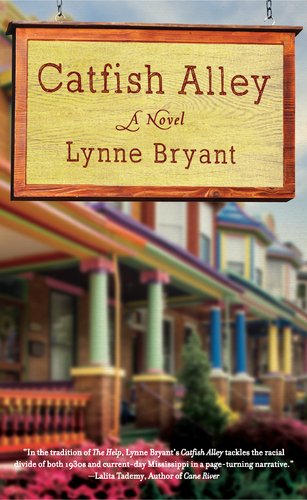
Book Review: Catfish Alley by Lynne Bryant

Last weekend I visited Mississippi to see some friends in Jackson and to attend my 20th high school reunion at the Mississippi School for Mathematics & Science in Columbus. When in Jackson, I stopped by Lemuria, my old stompin' grounds and one of the best damned bookstores in the country, to pick up an audio book to listen to on my road trip to Columbus, and while there, Maggie told me about Catfish Alley by Lynne Bryant, which is set in Columbus and reminiscent of Kathryn Stockett's runaway bestseller, The Help.  

The book shuttles back and forth between 2002 and the years 1921-1931.  Roxanne Reeves, director of her town's annual antebellum pilgrimage tour, and Grace Clark, a retired and quite elderly school teacher, anchor the modern segments, dipping randomly into the past with tales of Grace's youth, along with tales of her family and friends.  When Lousia, a wealthy and influential Yankee suggests that the town add an African-American segment to the pilgrimage tour, Roxanne reluctantly agrees to do some research, with the hope that in doing so she will land the lucrative and prestigious renovation contract for Louisa's gorgeous antebellum home.  Little does she realize that the awkward relationship she develops with Grace will become the most meaningful one in her life.  Grace takes her on a weekly tour of the places in town with historical significance to the black community, and Roxanne grows less uncomfortable (saying "more comfortable" would, sadly, be overstating things) playing the minority role with each passing week, but she does become genuinely and wildly interested in all of Grace's stories, particularly those involving her beloved brother, Zero.  

While this book does not tread fresh ground, and most readers will be able to predict the various turns of the narrative, there is an emotional heft here.  It is, of course, incredibly sad and awful to contemplate that a moderate-sized town in Mississippi in 2002 still has a strong racial divide.  Like most real people in our country, the characters in this book have a difficult time talking about race in any meaningful or constructive way, and as a reader I felt that lack of substance rather keenly.  But despite the many cliches (Roxanne tries to make friendly overtures with her maid after, oh, fifteen years of service; a racist white man learns some unpleasant facts about his father and seemingly overnight turns over a new leaf), there are some very somber and sobering moments, and because of narrative style we get several points of view that drive home just how deeply entrenched racism is, as well as the fear and bitterness that racism engenders--and that its purview is not solely south of the Mason-Dixon line. 

Catfish Alley is not a work of literary fiction by any means, but for me it was both an engaging and a quick read--what many people look for in a beach read, for example.  I think its aim is higher than its reach in terms of a meaningful dialogue on race, but perhaps that is what will enable it to be widely read, because sometimes folks just don't want to have to face difficult and uncomfortable subjects.  As it is, it comes across as a light read about women's relationships and thus will probably find toeholds among bookclubs and book bloggers in that genre. 

(Just to bring the point home, here are the Library of Congress classifications, in order,  listed on the copyright page of my book.  [shakes head in disbelief]: 1. Tour guides (Persons)--Fiction. 2 . Historic Sites -- Mississippi -- Fiction.  3. African-Americans -- Mississippi -- Fiction.  4. Mississippi -- Race relations -- Fiction. Because clearly this is a book first and foremost about tour guides.  And once again, race gets relegated to the last position.)