16 April 2011

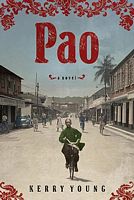
Book Review in Brief: Pao by Kerry Young

The eponymous Pao is only a small boy when he and his family emigrate from China to Jamaica in the wake of the Chinese Civil War and just prior to the outbreak of World War II.  After settling into the Chinatown area of Kingston, Pao grows up in its shadowy underworld and eventually becomes the civic-minded leader of its organized crime, doing business and protecting the Chinese minority in the city.  Using Sun Tzu's The Art of War as his conscience and guide, Pao's influence waxes and wanes against the backdrop of Jamaican politics, ranging from post-Colonial rule to Rastafarianism, from the Back-to-Africa movement to socialism.  

I've long been a reader of books of Caribbeana, particularly the fiction of the region, but this book gave me a wholly fresh perspective amidst the black African diaspora, white colonialism, and Indian subcultures that I've read before.  Race and class necessarily play a large role in this book, and while I wouldn't venture to say that Pao is a feminist, his dealings with women are largely well-balanced and even occasionally progressive for a man who is a product of his time and culture. 

To wit: Although Pao moves to Jamaica in 1938, the book opens in media res in 1945 when Pao  is beginning to earn his reputation as the go-to guy in Chinatown.  A  black Jamaican woman named Gloria comes to Pao to demand the justice that the law won't give her when a white sailor beats her sister almost to death.  Pao's brother urges him to drop the matter because the sister is a whore and, thus, should expect to get beaten up a bit from time to time, and further, that "white men been beating Jamaican women for three hundred years."  After much consideration, Pao's replies, "That is true, but this is the first time anybody come ask us to do something 'bout it." Thus marks the real beginning of Pao's unofficial career. 

While I didn't always like Pao, he is one of the most fascinating characters I've encountered in a long time, and seeing his trajectory from young boy to old man made for a satisfying read.  I'd recommend this book for readers interested in social stratification (class, gender, race), interesting character studies, or Jamaican politics. 

NB: I requested an ARC of this book from my MPS sales rep, Jen.  The book will be published  in the US by Bloomsbury as a paperback original in July of this year, but it is already available in the UK.  

15 April 2011

New Blog Hop in Town

I was just browsing my friend Robyn's blog and she mentioned that there's a new blog hop in town meant to encourage us to discover some book blogs in addition to seeing the same old ones each week on the other, more established hops.  This new hop is sponsored by Lucybird as a means of getting out of that old blog comfort zone.  Go by and check her out--her most recent review is of a lovely little book published by Algonquin, one of my favorite independent publishers. 

Book Review: The Sojourn by Andrew Krivak

Coming from Bellevue Literary Press, the same small publisher that brought us last year's Pulitzer Prize winner for fiction, Tinkers, is a tiny gem of a novel--The Sojourn by Andrew Krivak.  I hope that because of the publisher's track record that the book will get more review attention, because it certainly deserves it and, I suspect, would otherwise get overlooked.  Like Tinkers, it is a deceptively quiet novel filled with beautiful language and painstakingly crafted prose.  While I did not love it (I need to care more about my characters for that), I think it is a very fine novel. 

Jozef Vinich's life is marked by early tragedy when his father packs him up from the Americas and moves them both back to a small village in the Austro-Hungarian empire.  Life gets even more difficult with an unpleasant stepmother and a harsh life life as a shepherd.  When he and his half brother enlist in World War I, little do they realize that their dream of escape from their impoverished rural life is about to become a nightmarish struggle for survival in the trenches.  Round that off with the life of a sniper who is then taken prisoner and you'd think it would all make for some pretty exciting reading, right?

Well, actually not.  It is a very deliberate book, holding the reader always at arm's length, and though the atrocities of war are not skimped on, it was hard for me to work up more than a vague horror at any given point, or for that matter, more than a vague relief when each unpleasant situation passed.  The writing is beautiful, but more in a clinically precise way; the level of passion implied by the action never quite reaches the writing.  This may sound like I'm damning The Sojourn with faint praise but that's not true.  Just because I find it to be reserved doesn't mean I do not admire it.  I do, in fact.  And when customers talk with me about wanting a book that is finely crafted, whose writing is precise (Krivak always finds his mot juste), I will unhesitatingly recommend it.

Here's a sample of the writing. Krivak frequently writes paragrah-long sentences, (think Jose Saramago among the modern greats) and while they make take a bit more effort to read, the effort is certainly rewarded:

The northwestern Carpathians, in which I was raised, were a hard place, as unforgiving as the people who lived there, but the Alpine landscape into which Zlee and I were sent that early winter seemed a glimpse of what the surface of the earth looked and felt and acted like when there were no maps or borders, no rifles or artillery, no men or wars to claim possession of land, and snow and rock alone parried in a match of millennial slowness so that time meant nothing, and death meant nothing, for what life there was gave in to the forces of nature surrounding and accepted its fate to play what role was handed down in the sidereal march of seasons capable of crushing in an instant what armies might--millennia later--be foolish enough to assemble on its heights. 
Lovely, no?  And when read with a deliberate pace, really considering what he is putting forth here, one finds ultimately that it is worth reading.  And worth the little extra effort.  And if  one comes away feeling less than fervent about the characters or the events and is moved more by the language itself, then so be it. 

NB: I read this book in ARC format, but it releases in May as a paperback original publication.  I can't recall where I got this one--perhaps it came from Winter Institute, but perhaps it came in a white box from IndieBound.  My colleague, Michele Filgate, who was one of the people instrumental in introducing last year's Pulitzer committee to Paul Harding's work, happens to be enamored of this book, too, and with her support thrown behind it, I have no doubt it will thrive in communities of literary readers. 

Edited on 13 October 2011 to add: Yay!  This book was just shortlisted for the National Book Award!

12 April 2011

Book Review in Brief: Faith by Jennifer Haigh

  Faith by Jennifer Haigh

In her most recent novel, Haigh tackles yet another dysfunctional family, this time with more serious overtones.  She takes for her subject a priest accused of the worst sort of misconduct, set against the backdrop of the Boston Catholic archdiocese's recent (and sometimes, seemingly, ongoing) sex scandal.  Sheila McGann, the prodigal daughter from a blue collar Irish Catholic family, reluctantly narrates the story of her older brother, Father Art McGann, a loner since childhood and the apple of their undemonstrative mother's eye.  Unlike some writers, who might be tempted to sensationalize such a story, Haigh treats her subjects with directness, empathy and respect, bringing to light the complications and tragedies that emerge when long-suppressed secrets are revealed.  Once I began this story, every moment I spent not reading it felt wasted.

A bit of background about me and my coming to read this book: Even though I have read two of Haigh's previous books and thought them excellent (you can read one mini-review of The Condition here), I was not at first very interested in picking up this book because of the subject matter.  I didn't want to read a sensationalist account nor an apologia for the church. But then my Harper sales rep, Anne DeCourcey, sent me a link to other bookseller early reviews of Faith (the book releases in May) and I gave in, picking up the ARC that she had sent me some time ago. 

I am an avowed agnostic, but I was raised in the Episcopal tradition and I attended Catholic school for grades one-four until I moved from Wisconsin to Mississippi.  My mom hails from a large, blue collar, Irish Catholic family (she became an Episcopalian after her divorce) and one of my uncles was a Jesuit.  I remember, like the narrator Sheila McGann, having a crush on the young priest who taught religion class, and feeling somewhat in awe of him.  My classmates and I even played at being priests during recess.  Though it has been a few decades now, I am pretty well-steeped in Catholic traditions and rites.  

As an adult I moved to Massachusetts where I now live and where Roman Catholics are among the largest groups of church goers.  And so it was that when the huge scandal broke out in Boston of the sex abuse that the Archdiocese was aware of these abuses and not *really* doing much to correct them, I was, like most of the world, shocked and appalled, but there was a personal note to my outcry.  Because it is, of course, much more difficult to forgive of wrongdoing the person you trusted most to protect you.  

I think the Catholic church has quite a lot to answer for in terms of the devastation, cruelty, and harsh regimes that it has visited on its believers since its inception, and I don't lose sight of that.  But unfortunately I think that the multitude of good that it has done for the people of the world too often gets overlooked--as one bumper sticker says, Thank God for Liberation Theology.

04 April 2011

Must-Read Monday: New in Paperback!

   A Thread of Sky by Deanna Fei.  Lin Yulan, a revolutionary  and leader of the Chinese feminist movement, reluctantly returns to her homeland after a self-imposed exile for a guided tour of "the new China" with her two daughters and three granddaughters in an effort to heal their collective estrangement.  Each woman arrives in China with her own agenda, and each discovers that some secrets are simply too heavy to bear alone.  This powerful, intricately woven first novel is a meditation on grief & recovery, strength & vulnerability, and the urgency to leave one's mark on the world.  Three generations of women exploring their cultural heritage and navigating their generational differences: think Amy Tan  or Julia Alvarez.  A very promising debut!  

Also, Russian Winter just released in paperback this week.  Click here to read my first review of it.  

02 April 2011

Book Review: What There is to Say, We Have Said: The Correspondence of Eudora Welty and William Maxwell

 This review has been a long time coming, I'm afraid. I requested an ARC of it from my Houghton Mifflin Harcourt sales rep, Holly Ruck, back before Christmas 2010 as soon as I saw it catalogued.  You see, the woman who edited this correspondence is my beloved college advisor, Suzanne Marrs, and as a former resident of Jackson, Mississippi, I have long been enamored of Eudora Welty.  I had never read Miss Welty until I attended Millsaps College, located just across the street from the neighborhood where Miss Welty grew up.  (You'll soon come to find that those privileged enough to meet Eudora Welty refer to her as "Miss Welty."  To call her Eudora presumes too much acquaintance and to call her merely Welty in anything other than an academic setting feels too cold.  She is always "Miss Welty" to me, a lowly college student and later a bookseller, privileged to meet her a few times during my sojourn in Jackson. My DH, who collaborated with her as an illustrator of her work, sometimes forgets his Southern sensibilities and thus vexes me every time he calls her "Eudora" in my presence.  My dear mentor, John Evans of Lemuria Bookstore, who was a bourbon drinking buddy of hers and thus knew her better, always refers to her Miss Welty, or at least Miss Eudora.)

I should start off by admitting that I do not often read collections of correspondence.  My most recent one before this was the extraordinary collection of letters between Avis DeVoto and Julia Child, As Always, Julia, published last fall by the same publisher.  It was a revelation, I have to say.  It feels so intimate to read somebody else's correspondence, and when the correspondence is between two women as extraordinary as those two women were, reading the book is like a revelation.

My experience with Child and DeVoto, plus my personal connection to the Welty/Maxwell book, prompted me to request it. I've been an avid fan of Miss Welty's short stories and her memoir since my first year in college, when I first read One Writer's Beginnings, followed by The Golden Apples, in an advanced standing freshman English course that Suzanne Marrs taught, and I've been a devotee ever since of both writer and professor.

Since I moved north to New England from Mississippi, I frequently find myself in the position of defending the South, particularly my home state, from accusations of everything from not owning indoor plumbing to illiteracy.  I always retort that Mississippi certainly has its share of problems, but that I'm not sure any other US state can boast that it has produced the country's greatest novelist (William Faulkner), short story writer (Miss Welty), playwright (Tennessee Williams) AND musical contribution (Elvis Presley) of the twentieth century, so they'd better back down or be prepared for fisticuffs.  After hemming and hawing (Uh, Hemingway...Steinbeck...uh...oh, nevermind) they inevitably back down.

Miss Welty is famously funny among her circle of friends and family but has somehow acquired the reputation today of being somewhat dour or stodgy (from those who have never read her, I suspect).  Yes, her story Why I Live at the P.O. is frequently cited as humorous, but there is an impishness that lurks beneath the surface of her writing, as this excerpt will show.  It's from early on in the book, when Miss Welty writes to The New Yorker in 1933 to apply for a position.  Maxwell went to work there just three years later.  If you don't find this funny, you either don't read English as a first language, or there is something wrong with you:

Gentlemen,
I suppose you'd be more interested in even a sleight-o'-hand trick than you'd be in an application for a position with your magazine, but as usual you can't have the thing you want most.  
I am 23 years old, six weeks on the loose in N.Y. However, I was a New Yorker for a whole year in 1930-31 while attending advertising classes in Columbia's School of Business.  Actually, I am a southerner, from Mississippi, the nation's most backwards state...I have a B. A. ('29) from the University of Wisconsin, where I majored in English without a care in the world.  For the last eighteen months I was languishing in my own office in  radio station in Jackson, Miss., writing continuities, dramas, mule feed advertisements, and life insurance playlets; now I have given that up. 
As to what I might do for you--I have seen an untoward amount of picture galleries and 15 cent movies lately, and could review them with my old prosperous detachment, I think; in fact, I recently coined a general word for Matisse's pictures after seeing his latest at the Marie Harriman: concubineapple.  That shows you how my mind works -- quick, and away from the point.  I read simply voraciously, and can drum up an opinion afterwards.
...How I would like to work for you! A little paragraph each morning--a little paragraph each night, if you can't hire me from daylight to dark, although I would work like a slave.  I can also draw like Mr. Thurber, in case he goes off the deep end. I have studied flower painting. 
There is no telling where I may apply, if you turn me down; I realize this will not phase you, but consider my other alternative: the U of N. C. offers for $12.00 to let me dance in Vachel Lindsay's Congo.  I congo on.  I rest my case, repeating that I am a hard worker. 
Truly yours,   
Eudora Welty

I defy anybody to read that application for employment letter and not want to immediately delve into this collection of letters!  Let me just iterate that it's a treat to read the gently humourous and gently refined correspondence between these two literary giants of the twentieth century.  I feel that those who embark on this journey with them will not be disappointed.  This is not so much a pick-it-up-and-read-straight-through kind of book, but rather one to dip into from time to time, to travel back on the wings of these letters to a more courteous time, where casual cruelty and barbed words held no place with these writers.  The letters span nearly 50 years of the twentieth century and thus are not immune from the difficulties of their time.  While the civil rights movement isn't a huge presence in this correspondence, it still colors much of it.  Medgar Evers was murdered in cold blood in Jackson, not far as the crow flies from Miss Welty's house, which prompted her writing the chilling and eerie story, "Where the Voice is Coming From," published later in The New Yorker.

01 April 2011

Last Month in Review: March 2011


Wowsers--if it weren't for audio books, my average would be way down this month.  It's been busy at work, and between getting sick and taking a train trip down to Chadds Ford, PA (can't read on a train, sadly), I simply did not read as much in March.

1. Lost Voices by Sarah Porter--a forthcoming YA novel about girls who become sirens/mermaids after something tragic happens to them. Holly Ruck, my sales rep from Houghton Mifflin Harcourt, gave me the ARC.  

2. The Code of the Woosters by P. G. Wodehouse.  Picked this up in a second hand store, but I had read it about twenty years ago when I was a teenager. Now I picture Stephen Fry and Hugh Laurie as I'm reading it, which only adds to the pleasure.

3. Hector and the Secrets of Love by Francois LeLord.  My Penguin paperback rep, Ann Wachur,  gave me the ARC of this book, but I'm sorry to say that it disappoints compared to his first book.  The magic just isn't there. 

4. These Three Remain by Pamela Aidan.  This was also a re-read.  Gosh, but when I'm sick, forget comfort food.  Bring on the comfort books!  This is part three of an astonishingly well done trilogy that tells Pride and Prejudice from Mr. Darcy's point of view.  Most Austen fanfiction is pure dee crap, but this one stands out for how good it is.

5. The Uncoupling by Meg Wolitzer, the ARC of which I received from my Viking sales rep, Karl Krueger.  My review is here

6. Neither Here Nor There by Bill Bryson (audio).  Great, as always.  Listened to this one on one road trip to Boston and back. 

7. Turn of Mind by Alice LaPlante.  Got the ARC from my Perseus/PGW sales rep, Mike Katz.  Literary thriller about a former surgeon with dementia who is accused of murdering her best friend--but of course, she can't recall a thing about it, and what's more, her heart breaks every day she learns anew that her best friend is dead. Review forthcoming.

8. Notes from a Small Island by Bill Bryson (audio).  Listened to this one on another roadtrip to Boston and back.  I'd read the book before but this was my first listen. 

9. Games to Play After Dark by Sarah Gardner Borden.  The agent for this book sent me an ARC to read.  It's a novel forthcoming from Vintage about a young couple who grow apart as they grow older.

10. A Visit from the Goon Squad by Jennifer Egan.  National Book Critics Circle award winner for 2010.  Review is here

11. I'm a Stranger Here Myself by Bill Bryson (audio).  This one I read in book form a few years ago and it's one case where I preferred the book to the audio.  Bryson is funny, certainly, but these short vignettes worked better for me as a reader rather than a listener.  This one kept my company on my daily commute to work for about a week. 

12. Red Glove by Holly Black.  This YA ARC came to me from our Simon & Schuster rep, John Muse, via Marika McCooler, the store's children's buyer.  Highly enjoyable.  I like the way Black's individual books in a trilogy stand well on their own, too.  I abhor cliffhangers and she doesn't do that to her audience.  She'll be reading at our store in April along with Cassie Clare.

13. Tiny Sunbirds Far Away by Christie Watson.  I picked this Other Press ARC up at Winter Institute and only recently got around to it.  It is my favorite book that I read this month, about a Nigerian girl named Blessing who finds out the hard way that her family members, and even she herself, are not what they seem.  Great companion read to Little Bee or The Secret Lives of the Four Wives, giving more political background to the Nigerian oil crisis.  Review forthcoming. 


-----------------------------------------------------------------------------------------------------------

Interested in winning a signed copy of a book of your choosing?  Please read this post

Literary Blog Hop: What does canon status do for your reading?

Literary Blog Hop

What a long, strange week it's been!  Working two 13+ hour days can take it out of a gal, but it means our store had two really, really great author events, both of whom are among the most articulate and engaging with their audience as I've ever experienced: Jodi Picoult, clocking in at about 825 audience members, and Alexander McCall Smith, keeping close to 400 audience members in stitches the entire time.  So I'm a little tired and this blog has been a little, well, quiet, this week.

But Mother Nature is playing an elaborate April Fool's Day joke on us Bay Staters this morning, so there's a beautiful snow falling outside and I'm curled up indoors with the avowed intention of blogging and watching the last disc of the incomparable Downton Abbey with a bottomless pot o' tea by my side.  

This week's Literary Blog Hop question, sponsored by The Blue Bookcase, asks whether we are predisposed to like or dislike books that are generally accepted as great books and have been incorporated into the literary canon. 

Well.  While I frequently revisit many of my favorite canon authors, I actually don't read that many classics for the first time these days.  (Does that sound awful to admit?)  I read them quite a lot for high school, then later as an English major in college and in grad school.  Almost everything I read for school was part of somebody's canon--if not Harold Bloom's  dead white man canon, then part of the Women Studies canon, or African American Lit canon, etc--but I'm afraid whether I liked any of these works had very little to do with their canon status.  I might have respected them more as having stood some kind of test of time or meeting some tipping point with enough critics to be designated canon, but liking? No, I'm afraid not.

Liking a book is such a personal thing (and that's the verb we're supposed to address in today's question, insipid as it is.)  I understand why Moby-Dick and Ulysses are important contributions to English language lit, but I will never like them.  Reading Henry James, Marcel Proust, or Charles Dickens might actually be a better experience in Reader's Digest condensed forms since they clearly didn't have the benefit of a really good editor back in the day. 

To modify the question somewhat for contemporary books...most of the books I read these days I'm reading a few months ahead of their publication dates, which means there are few, if any, existing reviews of these books when I pick them up to read, and thus reading reviews rarely sways me because they simply aren't there.  For the twenty percent of the titles that I read after the pub dates, I'll say this: a good review often convinces me to pick up a book I'd not paid attention to before, but it's rare that a bad review will sway me from a book I had already decided to read.  And that might be an answer closer to the spirit in which this week's question was asked.  Yes, other opinions sometimes matter. 
-----------------------------------------------------------------------------------------------------------

Interested in winning a signed copy of a book of your choosing?  Please read this post

25 March 2011

Book Review: A Visit from the Goon Squad


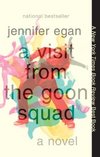
 (NB: On the left is the hardcover/ARC edition and on the right is the new paperback edition.  While I find the left one more visually appealing, the abstract pb cover art I think is more appropriate and less misleading.)

A Visit From the Goon Squad  by Jennifer Egan has been earning so many accolades that I finally picked it up to see what it's all about.  My sales rep from Random House, Ann Kingman, gave me a copy of the book in ARC form last year but I never got around to reading it (though I did buy it for my nephew for Christmas 2010 based on the reviews).  The New York Times named it a Top 10 Book of that year and now it's also the winner of the National Book Critics Circle Award (incidentally, the prize I most respect out of the "Big Three" literary prizes in the US: the Pulitzer, the National Book Award, and the NBCC). I have read and enjoyed two of Egan's previous novels, so it's a bit of a surprise that it took me this long to get to this one.  

While I cannot say that I loved it, I can say that it's a pretty impressive and more than a little interesting novel.  What none of the reviews I read mentioned, however, is that it seems to be less a cohesive novel than a full length work of disjointed stories.  The key characters are so randomly interspersed throughout the book that it took more than a little effort to keep up with them, though admittedly that might have more to do with my attention span this week.  In most cases I just write up my own little cast of characters and chart them, but I didn't care enough about these people to do that.

The book's description tells us that Bennie and Sasha are the main characters, but since they don't actually appear in most of the book, I'm not sure I agree with that assessment.  Mostly the book jumps back and forth in chronology and we get various back stories and future stories for Bennie and Sasha, which means we're hearing more about their parents, children, uncle, spouses, bosses and significant others than we do about Bennie, a music mogul, and Sasha, his erstwhile assistant.  Along the way, Egan takes us for a ride through American pop culture with sidetrips to African for a safari, to Naples for a look at the city's underbelly, and to NYU for reasons that remain unclear to me.  We get alternating first, third, and even second person points of view (used with only limited success) and sometimes it takes longer than it ought for the reader (and I figure I'm at least as astute as most) to figure out just who the heck we're dealing with and where in the overarching chronology of the book we are.

Which is not to say I disliked the book or think it's not good, despite the bizarre section near the end that is done in the style of a Power Point presention, presumably to show how an autistic child named Lincoln sees the world visually and compartmentally.  The narrative problem, however, is that the point of view seems to be from his sister Ally, so the Power Point becomes more an elaborate ruse than an essential part of the story.  And yet, by the time I closed the book tonight and reflected on the ride Egan took me on, I was left feeling like this really is a novel of our time, reflecting the disjointedness and fragmentation of our society.

Egan's prose is always serviceable and occasionally elegant.  Here's a short passage that I liked, which I'd say is pretty representative of her style: "But eventually a sort of amnesia had overtaken Susan; her rebellion and hurt and melted away, deliquesced into a sweet, eternal sunniness that was terrible in the way that life would be terrible, Ted supposed, without death to give it urgency and shape."  I think this may be the first time that I've encountered deliquesce as a verb, and it's a word worth using.

A Visit from the Goon Squad is, for me at least, a more interesting read than a great one, but I am quite glad that I went along for the ride.  I recommend it for people who don't mind working a little bit at their novels and for those looking for something a little off the beaten track in terms of narrative and structure.

Edited on 18 April 2011 to add: Today this book won the Pulitzer Prize.  I'm just a little bit surprised that it nailed two out of the three major literary awards in the US...

24 March 2011

Andre Dubus III: Best author reading ever

Photo of Andre Dubus III and me

I mentioned Townie by Andre Dubus III in a blog post a couple of months ago as the book I read each morning over breakfast before work.  Since I'm usually running behind, this often doesn't amount to more than a couple of pages read on any given day, but I like having it to look forward to each morning, and if you've already read Dubus, you know that he's a great way to start the day! I'm still only about halfway through it, but it's such a compelling portrait of a man and his life that I'm pleased to make it last as long as possible.

My store hosted an event with Dubus last night, and because we expected a large crowd, we held the event offsite at Mount Holyoke College, just across the street from our store, in a mahogany-paneled room called The New York Room.  It's an attractive space to hold a reading and it feels very intimate, despite the 100 person capacity.  Dubus read from his memoir but it was the Q&A session  that held us spellbound.  Mr. Dubus is that rare writer who can quote at length any number of other writers to illustrate a point (Flannery O'Connor, John Gardner, William Faulkner, et al), and he artfully interweaves personal anecdotes into his answers.  Never once does he let on to the annoying person in the back of the room that he'd rather not answer her tenth stupid question in a row or that he's been on his feet for 10 hours and would prefer not to sign 75 books for store stock--he is the absolute portrait of graciousness. Dubus is charming, charismatic, and has the ability to focus on you so intently he can make you feel like you're the only other person in the room.  And yet he also comes across as perhaps the most down-to-earth person you've ever met, an erudite beer-drinking buddy.  Let me put it this way: if he ever decided to use his powers for evil, we'd be in a world of trouble.

I'll post a review of Townie once I've finished it, but until then, you'll have to take my word that Andre Dubus III is a writer and a person of the highest order.

Dubus signing in the New York Room